Understanding Near-Infrared Spectroscopy, NIR Spectrometers and Their Applications
Near-infrared spectroscopy has become an increasingly important analytical technique for industries that need fast, reliable and non-destructive measurements. From analysing moisture in agricultural products to monitoring chemical processes and identifying materials, NIR spectroscopy provides valuable information without the need for complex sample preparation.
Modern NIR spectrometers have also become significantly smaller and easier to integrate. This has opened up new opportunities for near-infrared analysis outside the traditional laboratory environment.
Today, compact NIR spectrometer modules can be incorporated into industrial equipment, handheld analysers, process-monitoring systems and OEM instruments. At the same time, larger and more sophisticated systems can provide extended wavelength coverage and high sensitivity for demanding research and analytical applications.
Photonic Solutions supplies a range of NIR spectrometers and near-infrared spectroscopy technologies for research, industry and OEM applications. Our portfolio includes compact industrial spectrometers, miniature InGaAs spectrometers, extended-range NIR systems and portable NIR analysers.
In this guide, we explore how NIR spectroscopy works, what NIR spectrometers measure and how to select the right system for your application.
What is NIR Spectroscopy?
Near-infrared spectroscopy, or NIR spectroscopy, is an analytical technique that measures how a material interacts with near-infrared light.
When NIR light interacts with a sample, certain wavelengths are absorbed by molecular bonds within the material. These absorptions are particularly associated with bonds involving hydrogen, including C-H, O-H and N-H bonds.
The resulting spectrum contains information about the chemical composition and physical properties of the sample. By comparing the measured spectrum with reference data or calibration models, users can determine characteristics such as moisture content, chemical concentration or material identity.
One of the major advantages of NIR spectroscopy is its ability to analyse samples rapidly and with little or no preparation. In many applications, the measurement does not damage the sample. As a result, manufacturers can use NIR analysis for quality control and process monitoring without interrupting production.
NIR spectroscopy is now used across a wide range of industries, including:
- Food and agriculture
- Pharmaceuticals
- Chemical processing
- Plastics and polymers
- Petrochemicals
- Environmental monitoring
- Materials science
- Biomedical research
- Industrial quality control
The technique is also increasingly moving beyond the laboratory. Compact spectrometers can now provide NIR measurements directly within industrial instruments and automated processes.
How Does NIR Spectroscopy Work?
A typical NIR spectroscopy system directs near-infrared light towards a sample and measures the resulting optical response.
Depending on the application, the system may measure light that passes through the sample, reflects from its surface or is collected from a specific measurement area.
A simplified NIR measurement can be represented as:
NIR light source → Sample → Collection optics → Spectrometer → Detector → Software → Analysis
The spectrometer separates the incoming light according to wavelength. The detector then converts the optical signal into an electrical signal, allowing software to produce and analyse the resulting spectrum.
The exact design of the system depends on the application. A laboratory instrument may prioritise spectral resolution and sensitivity, while an OEM system may need to minimise size, power consumption and cost.
This difference has driven the development of increasingly compact NIR spectrometer modules.
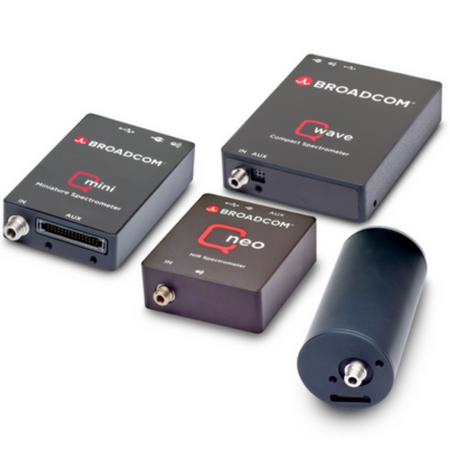
For example, the Broadcom QNeo uses a 256-pixel uncooled InGaAs detector and covers 950–1700 nm. Despite its compact 60 × 50 × 19 mm dimensions, it provides a 12000:1 dynamic range and interfaces including USB, SPI and UART.
What Does a NIR Spectrometer Measure?
A NIR spectrometer measures the intensity of light across a defined wavelength range.
However, the spectrum itself is not normally the final measurement. Instead, software and calibration models translate spectral information into useful information about the sample.
Depending on the application, NIR spectroscopy can be used to measure or predict:
- Moisture content
- Protein concentration
- Oil and fat content
- Chemical composition
- Material identity
- Concentration
- Product consistency
- Raw material quality
- Process changes
For example, NIR analysis can measure moisture in solids, powders and liquids. It can also help identify different plastics or monitor changes in chemical composition during a manufacturing process.
The quality of the final result depends on more than the spectrometer itself. Sampling method, optical configuration, calibration and data analysis all play important roles.
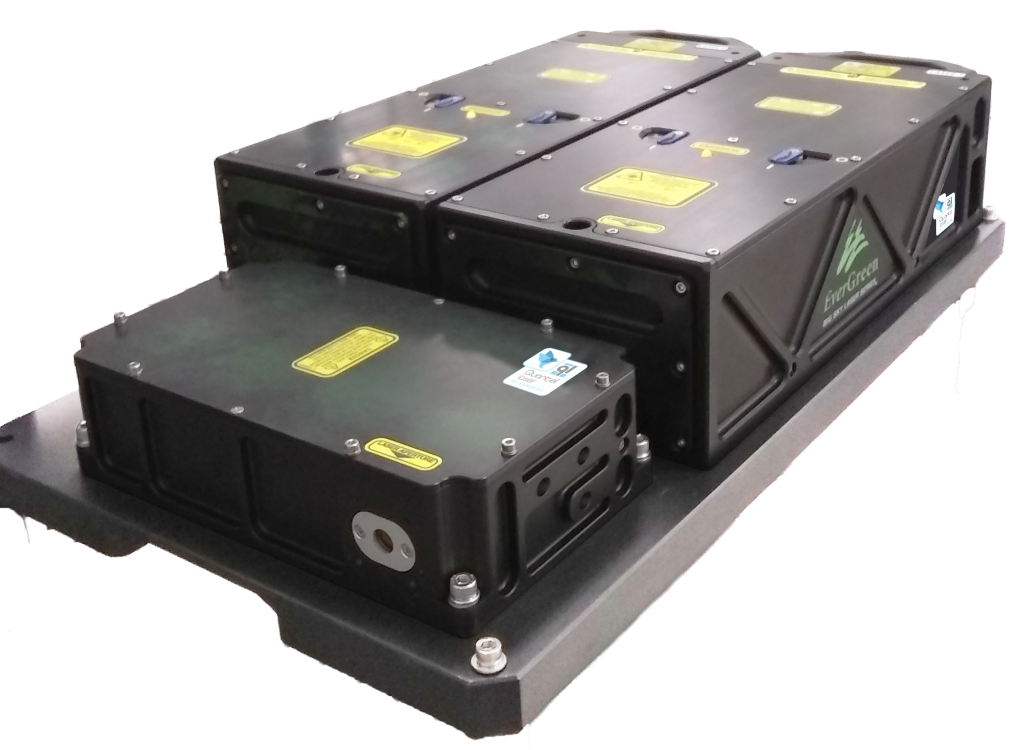
The Quantel by Lumibird EverGreen Twins is a high-performance, four-pulse Nd:YAG laser system designed for advanced particle image velocimetry (PIV), fluid mechanics and flow visualisation applications. Combining two synchronised EverGreen dual-pulse laser systems, it delivers four precisely overlapped laser pulses at 532 nm, enabling researchers to capture complex flow dynamics with enhanced temporal resolution and an extended velocity measurement range.
The EverGreen Twins is available in three energy configurations, delivering 4 × 60 mJ, 4 × 125 mJ or 4 × 175 mJ per pulse sequence at a repetition rate of 15 Hz. Its four-pulse architecture enables advanced PIV techniques, allowing users to investigate acceleration and transient flow behaviour in addition to conventional velocity measurements. The precisely overlapped green beams produce a consistent illumination field, supporting reliable particle tracking and correlation analysis.
Designed for demanding laboratory and field environments, the EverGreen Twins combines a rugged, compact construction with practical features for straightforward deployment. The laser head is IP66 sealed and compliant with MIL-STD-810 requirements for vibration and shock resistance. Grab-and-go handles, quick-disconnect cables and an integrated cooling and electronics unit simplify transportation and setup. The system is designed to move from its shipping case to laser operation in less than 10 minutes.
The EverGreen Twins also offers long-term operational reliability, with a two-year warranty covering the system, optics and beam overlap. Flashlamps are guaranteed for up to 100 million shots, subject to the manufacturer’s warranty conditions.
Typical applications include particle image velocimetry (PIV), laser-induced fluorescence (LIF), combustion research, fluid mechanics and advanced flow diagnostics. Its four-pulse capability makes it particularly suitable for experiments requiring high temporal accuracy and detailed analysis of rapidly changing flow fields.

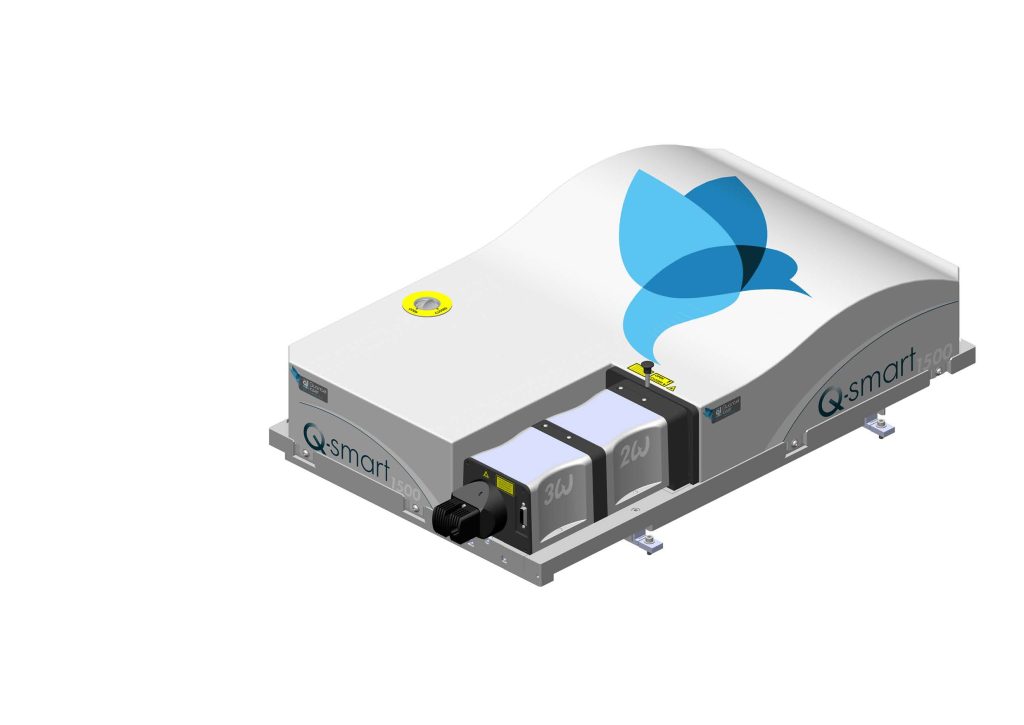
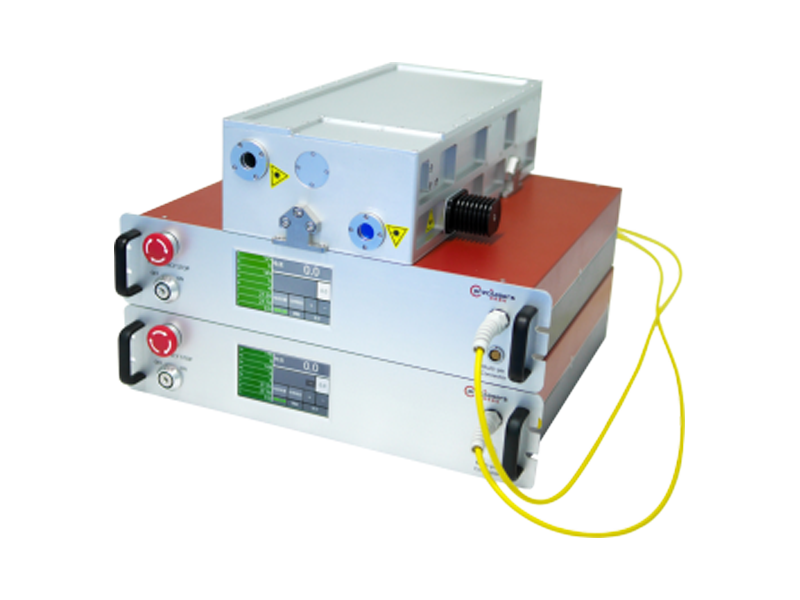
The Shanghai Precilaser Narrow Linewidth Laser range comprises high-performance continuous-wave (CW) laser sources designed for applications requiring exceptional spectral purity, frequency stability and precise wavelength control. Combining single-frequency seed lasers, low-noise fibre amplification and advanced frequency-conversion technology, Precilaser delivers narrow-linewidth laser solutions for demanding scientific research, quantum technology and advanced industrial applications.
Available across a broad range of wavelengths, Precilaser’s narrow-linewidth lasers cover the ultraviolet, visible and near-infrared regions. Configurations include wavelengths from 313 nm to 1610 nm, with additional frequency-converted options available for specialised applications. Output power ranges from milliwatts to several watts, depending on wavelength and configuration. This flexibility allows users to select a laser source tailored to their experimental requirements.
At the heart of the range is advanced single-frequency laser technology, designed to provide stable, mode-hop-free operation and low frequency noise. Selected models achieve linewidths below 10 kHz, while specialised fibre seed lasers offer linewidths down to the kilohertz range. High-quality TEM₀₀ beam profiles, linear polarisation and low intensity noise support precision optical measurements and demanding interferometric applications.For applications requiring specific atomic transitions or shorter wavelengths, Precilaser also offers frequency-converted laser systems using efficient nonlinear optical techniques. These systems extend the available wavelength range and provide high spectral stability for precision measurement, spectroscopy and advanced optical instrumentation.
Typical applications include quantum computing, atomic and molecular spectroscopy, optical frequency standards, interferometry, precision metrology, laser cooling and trapping, LIDAR and semiconductor wafer inspection. With a broad selection of wavelengths, output powers and configurations, Precilaser narrow-linewidth lasers provide a flexible foundation for research laboratories and OEM systems.
Photonic Solutions supplies Shanghai Precilaser laser technology to customers across the UK and Ireland, with technical support to help identify the appropriate wavelength, linewidth and output configuration.

Choosing a NIR Spectrometer
Selecting the right NIR spectrometer requires careful consideration of the measurement rather than simply choosing the instrument with the widest wavelength range.
Several factors can influence the performance of a NIR spectroscopy system.
Wavelength Range
The required wavelength range depends on the properties you need to measure.
Some applications can work effectively within the shorter NIR region, while others require extended coverage into longer wavelengths.
For example, the Broadcom QNeo covers 950–1700 nm, making it suitable for many compact industrial and OEM applications. For applications requiring wider NIR coverage, the Optosky ATP8000 can be configured for ranges extending to 2600 nm.
Choosing the appropriate wavelength range can therefore avoid unnecessary cost and complexity.
Spectral Resolution
Spectral resolution describes how closely two wavelengths can be distinguished.
Higher resolution can help identify narrow spectral features. However, maximum resolution is not always the most important specification. Increasing resolution can also affect optical throughput and sensitivity.
The ideal balance depends on the characteristics of the sample and the measurement being performed.
Detector Technology
Detector choice has a significant influence on NIR spectrometer performance.
InGaAs detectors are widely used for NIR measurements because they offer good sensitivity across the near-infrared region.
The Broadcom QNeo, for example, uses an uncooled 256-pixel InGaAs detector. The Optosky ATP8000 uses a TE-cooled InGaAs detector and provides extended spectral configurations.
Cooled or Uncooled?
Cooling can reduce detector noise and improve sensitivity, particularly when measuring weak optical signals.
However, cooling also adds complexity, power consumption and potentially physical size.
An uncooled NIR spectrometer can therefore be an attractive option for industrial and OEM applications where compact size, low power consumption and straightforward integration matter.
The QNeo demonstrates this approach by combining an uncooled InGaAs detector with a compact package and high dynamic range.
For demanding low-light applications, a cooled detector may provide advantages.
Neither approach is universally better. The correct choice depends on the application.
Cooled vs Uncooled NIR Spectrometers
| Requirement | Uncooled NIR | Cooled NIR |
|---|---|---|
| Compact design | Excellent | Good |
| Low power consumption | Excellent | Good |
| OEM integration | Excellent | Good |
| Low-light measurements | Good | Excellent |
| Reduced detector noise | Good | Excellent |
| Portable instruments | Excellent | Good |
| Demanding laboratory measurements | Application dependent | Excellent |
The key is to consider the complete measurement rather than focusing on a single specification.
NIR Spectrometers for OEM Applications
One of the most significant developments in NIR spectroscopy has been the move towards OEM integration.
Traditionally, NIR analysis relied on dedicated laboratory instruments. Today, manufacturers can integrate miniature spectrometer modules directly into their own equipment.
This approach can make NIR analysis practical for:
- Handheld analysers
- Process monitoring systems
- Agricultural instruments
- Food analysis equipment
- Pharmaceutical instruments
- Chemical analysers
- Environmental monitoring systems
- Plastics sorting equipment
- Industrial quality-control systems
Compact spectrometers can provide the optical measurement while the OEM develops the sampling system, electronics, software and user interface around it.
Broadcom’s miniature spectrometer range specifically targets industrial and OEM integration. Its products cover wavelengths from 190–1700 nm, while the QNeo focuses on industrial NIR measurements from 950–1700 nm.
This approach allows manufacturers to add spectroscopy to an instrument without developing an optical spectrometer from scratch.
NIR Spectroscopy Applications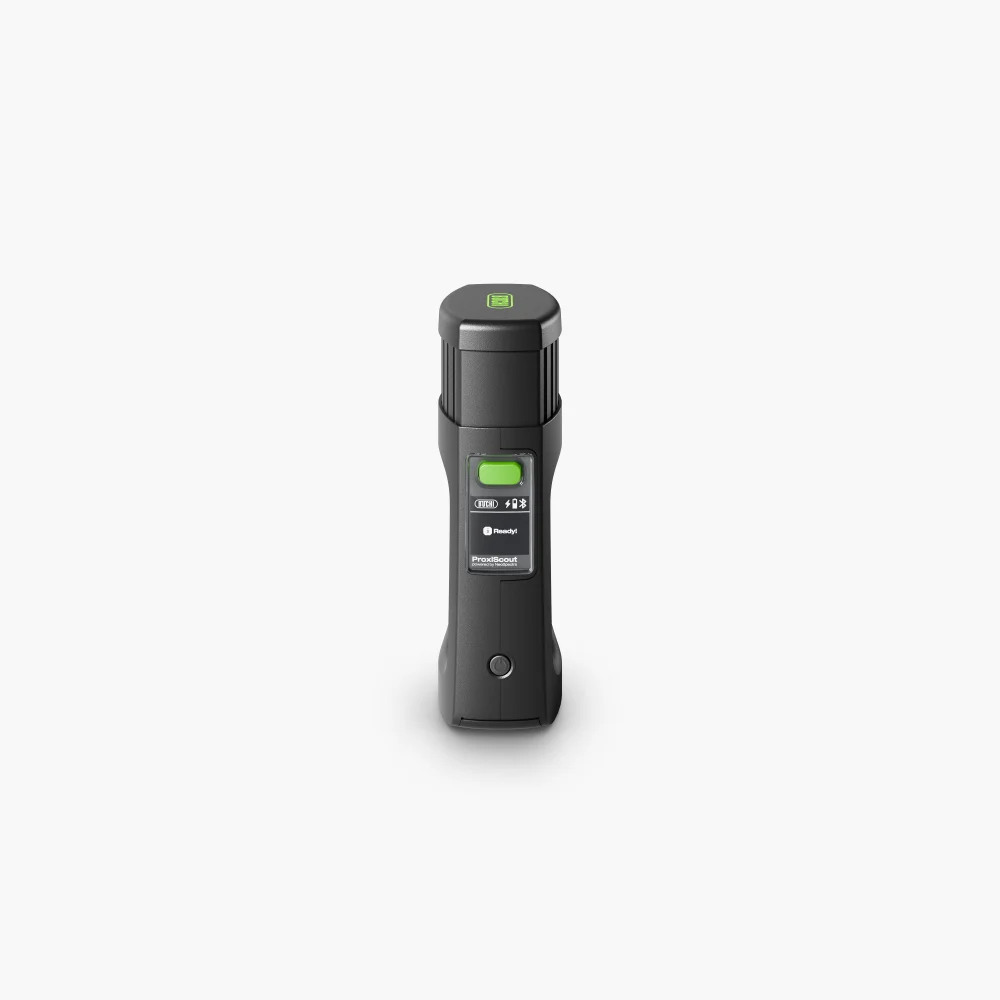
The flexibility of NIR spectroscopy makes it suitable for a remarkably broad range of applications.
Food and Agriculture
NIR analysis provides a rapid way to assess the composition of food and agricultural products.
Applications can include measurement of:
- Moisture
- Protein
- Oil
- Fat
- Raw material composition
Portable systems can also bring NIR analysis directly to farms, production facilities and inspection locations.
The ProxiScout portable NIR analyser, for example, is designed for field-based material analysis and covers 1350–2500 nm. It can measure parameters including protein, oil and moisture.
Pharmaceutical Analysis
Pharmaceutical manufacturers require reliable methods for identifying and checking raw materials and finished products.
NIR spectroscopy can support:
- Raw material identification
- Quality control
- Process monitoring
- Product consistency
- Non-destructive analysis
Because NIR measurements can be rapid and require little sample preparation, the technique can also support automated manufacturing processes.
Plastics and Polymer Analysis
Different materials produce different spectral responses in the NIR region.
This makes NIR spectroscopy useful for material identification and plastics sorting.
Automated systems can use spectral information to distinguish materials and improve sorting processes. The Broadcom QNeo is already positioned for optical plastic sorting alongside agricultural, food, chemical and environmental analysis.
Chemical Analysis
NIR spectroscopy can provide rapid information about chemical composition without relying on lengthy laboratory procedures.
This makes it useful for monitoring raw materials and tracking changes during manufacturing.
Petrochemical Applications
Extended-range NIR spectroscopy can support analysis of hydrocarbon-based materials and petrochemical processes.
For these applications, a spectrometer with appropriate long-wavelength sensitivity can provide access to additional spectral information.
Environmental Monitoring
Compact NIR spectrometers can support environmental measurements where equipment needs to operate outside a conventional laboratory.
Small form factors also make it easier to integrate spectroscopy into portable and remote measurement systems.
Portable NIR Spectroscopy
Laboratory spectroscopy is no longer the only option for material analysis.
Portable NIR analysers can bring measurement capability directly to the point of need. This can reduce the need to transport samples back to a laboratory and allows users to make decisions while materials are still within the production or supply chain.
The ProxiScout Portable NIR Analyser is designed for rapid field analysis and uses a 1350–2500 nm spectral range. Its rugged IP65 housing and mobile workflow make it suitable for measurements outside the laboratory.
Portable NIR spectroscopy can therefore be particularly useful for:
- Raw material inspection
- Agricultural analysis
- Incoming goods testing
- Process checks
- Field measurements
- Quality control
Extended-Range NIR Spectrometers
Not every NIR application requires the same wavelength range.
Where longer wavelengths are important, an extended-range NIR spectrometer can provide access to additional spectral information.
The Optosky ATP8000 offers configurations covering 900–1700 nm, 900–2100 nm and 900–2600 nm. It uses TE-cooled InGaAs detectors and offers different detector and slit configurations to balance spectral resolution and optical throughput.
This makes the ATP8000 suitable for applications including:
- Materials analysis
- Food and grain analysis
- Plastics and polymers
- Pharmaceutical quality control
- Environmental measurements
- Petrochemical analysis
- NIR laser characterisation
The ability to configure the spectral range can be particularly useful when designing a specialist analytical instrument.
NIR Spectroscopy for Process Monitoring
NIR spectroscopy can provide a powerful tool for monitoring industrial processes.
Instead of removing samples for laboratory analysis, an optical system can measure material directly within the production environment.
This can provide faster feedback and help manufacturers identify changes before they affect product quality.
Compact spectrometers are particularly attractive for this type of application because they can integrate directly into process equipment.
Broadcom’s QNeo and other miniature spectrometers have been developed with industrial integration and process monitoring in mind. The QNeo provides USB, SPI and UART interfaces, allowing developers to incorporate spectral measurements into their own systems.
NIR Spectrometer Selection Guide
| Application | Key consideration | Example solution |
|---|---|---|
| OEM instrument | Size, power and integration | Broadcom QNeo |
| Process monitoring | Stability and interfaces | Broadcom QNeo |
| Food analysis | Calibration and sampling | QNeo / ProxiScout |
| Agricultural analysis | Portability and sampling | ProxiScout |
| Materials analysis | Wavelength and resolution | ATP8000 |
| Plastics sorting | Speed and spectral response | QNeo |
| Pharmaceutical analysis | Sensitivity and repeatability | ATP8000 |
| Extended NIR analysis | Long wavelength coverage | ATP8000 |
| Field measurements | Portability and ruggedness | ProxiScout |
The table provides a useful starting point, but the most appropriate spectrometer will depend on the sample, measurement geometry and required analytical performance.
NIR Spectroscopy vs FT-NIR
NIR spectroscopy encompasses several different instrument architectures.
A dispersive NIR spectrometer separates incoming light into its constituent wavelengths using optical components such as diffraction gratings. This approach can produce compact spectrometer modules that work well in embedded and OEM applications.
FT-NIR, or Fourier-transform near-infrared spectroscopy, uses an interferometer and Fourier-transform analysis to obtain spectral information.
Both approaches have advantages. The best choice depends on factors such as:
- Spectral range
- Resolution
- Sensitivity
- Measurement speed
- Instrument size
- Cost
- Portability
- Integration requirements
The ProxiScout, for example, uses an FT-NIR approach for portable material analysis.
Why Choose Photonic Solutions for NIR Spectroscopy?
Choosing a NIR spectrometer involves more than comparing wavelength ranges and detector specifications.
The sampling arrangement, optical interface, calibration method and intended application all affect the final measurement.
Photonic Solutions supplies NIR spectroscopy technologies for research, industry and OEM applications, backed by technical expertise in lasers, spectroscopy, optics, microscopy and diagnostics. The company works with established manufacturers and provides technical support alongside its product portfolio.
Our NIR portfolio includes compact industrial spectrometers from Broadcom, miniature and extended-range systems from Optosky and portable NIR analysis solutions such as ProxiScout.
If you are developing a new instrument, integrating NIR sensing into an existing system or selecting a spectrometer for laboratory analysis, our specialists can help you identify the appropriate technology.
Contact Photonic Solutions to discuss your NIR spectroscopy requirements.
NIR Spectroscopy FAQs
What is a NIR spectrometer?
A NIR spectrometer measures the intensity of near-infrared light across a defined wavelength range. The resulting spectrum can provide information about the composition and properties of a material.
What does NIR spectroscopy measure?
NIR spectroscopy can measure or predict properties including moisture, protein, oil, chemical composition and material identity. The exact measurement depends on the sample and calibration model.
What wavelength range does NIR spectroscopy cover?
The near-infrared region is commonly considered to extend from around 780 nm to 2500 nm, although definitions vary. Commercial NIR spectrometers cover different portions of this range according to their detector and optical design.
What is an InGaAs spectrometer?
An InGaAs spectrometer uses an indium gallium arsenide detector to measure near-infrared radiation. InGaAs detectors are widely used for NIR spectroscopy because of their sensitivity in the relevant wavelength range.
What is the difference between cooled and uncooled NIR spectrometers?
Cooled detectors can provide lower noise and improved sensitivity, while uncooled systems can offer lower power consumption, smaller dimensions and simpler integration.
Can NIR spectroscopy analyse solids?
Yes. NIR spectroscopy can analyse solids, powders, grains, polymers and many other materials using suitable reflectance or transmission measurement configurations.
Can NIR spectroscopy analyse liquids?
Yes. NIR spectroscopy can measure liquids and can provide information about composition, concentration and moisture.
What is an OEM NIR spectrometer?
An OEM NIR spectrometer is a compact spectroscopy module designed to be integrated into another instrument or measurement system.
Can NIR spectroscopy be used for process monitoring?
Yes. Compact NIR spectrometers can integrate into process equipment and provide rapid measurements without requiring samples to be sent to a laboratory.
What NIR spectrometer should I choose?
The right NIR spectrometer depends on your required wavelength range, resolution, sensitivity, sample type, measurement geometry, operating environment and integration requirements. Photonic Solutions can help you identify the most appropriate solution.