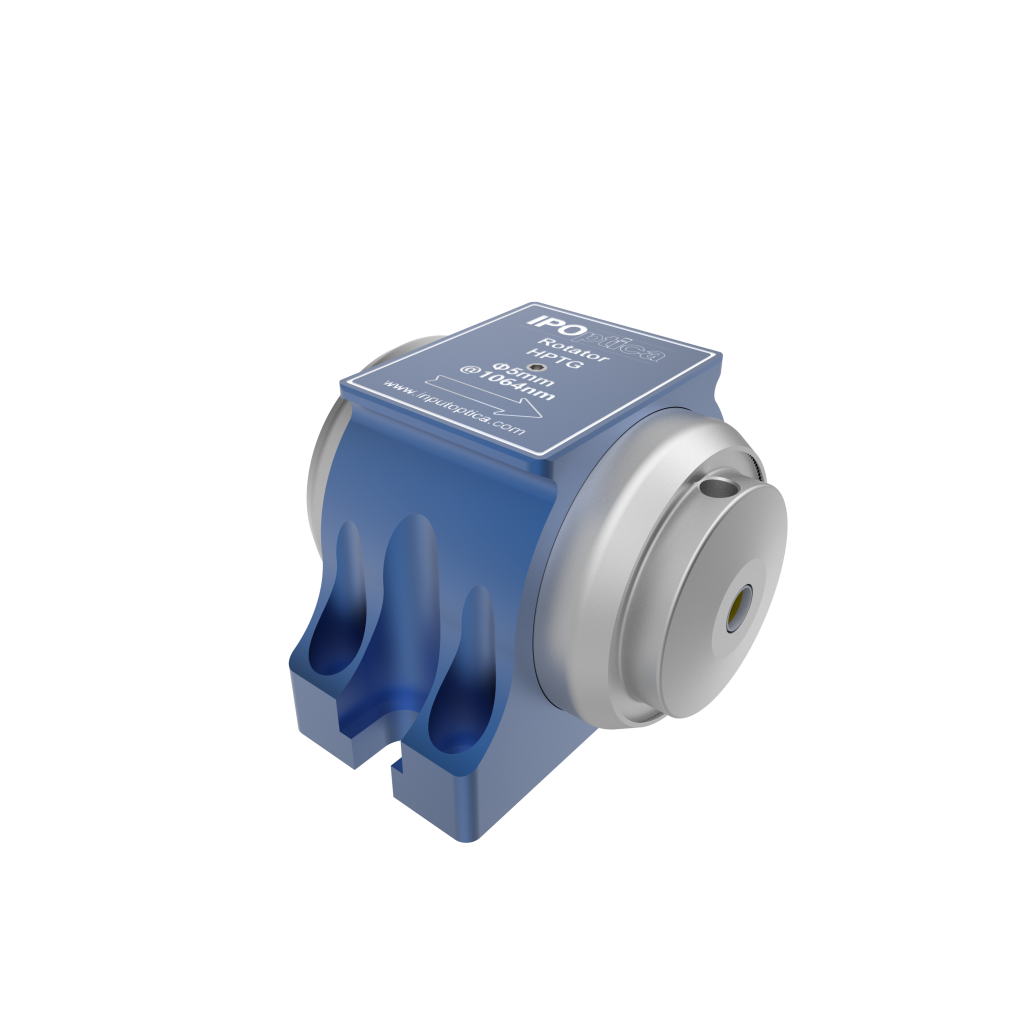
What is an optical isolator?
An optical isolator, sometimes called a Faraday isolator, is a non-reciprocal optical device that allows light to pass in one direction while suppressing reflections travelling back towards the laser source.
Back reflections can destabilise a laser by introducing unwanted optical feedback into the cavity or seed source. In sensitive systems, this can affect output power, linewidth, frequency stability and beam quality. In high-power systems, reflected light can also contribute to optical damage.
Faraday isolators use the magneto-optic effect to rotate the polarisation of transmitted light. Combined with polarising optics, this creates directional isolation: forward-propagating light is transmitted efficiently, while reverse-propagating light is rejected.
Optical isolators are widely used in solid-state lasers, fibre lasers, ultrafast laser systems, amplifier chains, spectroscopy, nonlinear optics and precision measurement systems.
Optical Isolator vs Faraday Rotator: What’s the Difference?
Although optical isolators and Faraday rotators are closely related, they perform different functions within a laser system.
A Faraday rotator rotates the polarisation of transmitted light through a magneto-optic material. A typical Faraday rotator provides a defined rotation angle, such as 45°, and can be incorporated into a larger polarisation-control system.
An optical isolator combines non-reciprocal Faraday rotation with polarisation-selective optics to provide one-way transmission. Its primary purpose is to suppress back reflections and prevent optical feedback from reaching the laser source.
In simple terms:
| Component | Primary function |
|---|---|
| Faraday rotator | Rotates polarisation |
| Optical isolator | Rotates polarisation and suppresses reverse-propagating light |
| High-power isolator | Provides feedback protection at high optical power |
| Dual-stage isolator | Provides enhanced isolation using multiple magneto-optic stages |
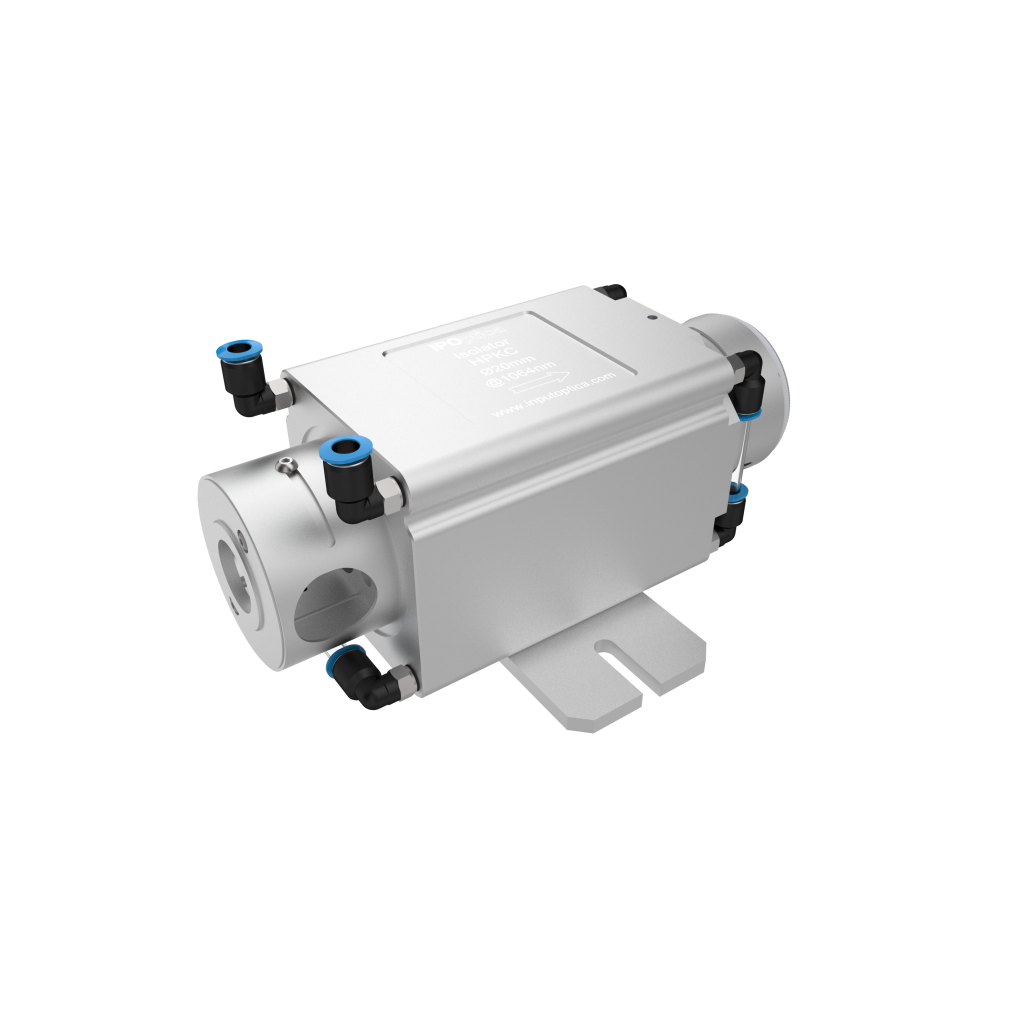
Why are optical isolators important in laser systems?
I’d use short, scannable subsections.
Protect laser sources from back reflections
Reflected light entering a laser can introduce unwanted feedback, potentially affecting output stability and frequency performance.
Improve laser stability
Suppressing optical feedback can help maintain stable laser operation, particularly in sensitive seed and amplifier systems.
Protect amplifier chains
Optical isolators can prevent unwanted signals and amplified spontaneous emission (ASE) from propagating towards earlier stages of a laser system.
Maintain beam quality
High-performance isolators are designed to minimise insertion loss, thermal lensing and depolarisation while maintaining the required beam characteristics.
Support high-power and ultrafast lasers
Specialist isolators can be designed for high average power, high pulse energy and short pulse durations.
How to choose an optical isolator
Selecting an optical isolator requires more than matching the operating wavelength. The isolator must be compatible with the laser power, pulse characteristics, beam diameter and optical configuration.
Wavelength
Choose an isolator designed for the laser’s operating wavelength and required spectral bandwidth.
Your current range covers everything from approximately 320 nm to 5000 nm, depending on the product family. The VITG, for example, covers 320–980 nm, while the NLYG range extends into the mid-IR.
Optical power
For CW lasers, consider average power and thermal loading.
For pulsed systems, peak power, pulse energy and pulse duration are critical.
Damage threshold
High-energy and ultrafast systems require an isolator with an appropriate optical damage threshold.
Clear aperture
The aperture must accommodate the beam diameter without introducing unacceptable clipping or diffraction.
Your InPut Optica range includes apertures from a few millimetres up to 70 mm on some high-power ranges.
Isolation ratio
Isolation, normally specified in dB, indicates how effectively reverse-propagating light is suppressed.
Insertion loss
Low insertion loss is important where maximum transmission and system efficiency are required.
Pulse duration
For femtosecond and picosecond systems, the optical design needs to minimise dispersion, pulse distortion and nonlinear effects.
Optical Isolator Selection Guide
| Requirement | Recommended solution |
|---|---|
| General laser feedback protection | Free-space optical isolator |
| Broadband wavelength coverage | Broadband optical isolator |
| High-power CW laser | High-power Faraday isolator |
| High-energy pulsed laser | High-damage-threshold isolator |
| Femtosecond laser | Ultrafast/high-power isolator |
| Large beam diameter | Large-aperture isolator |
| Mid-IR laser | Mid-IR optical isolator |
| Enhanced isolation | Dual-stage optical isolator |
| Multi-kilowatt systems | Water-cooled optical isolator |
| Polarisation rotation | Faraday rotator |
Optical Isolators for Ultrafast and Femtosecond Lasers
Ultrafast laser systems place particularly demanding requirements on optical isolation. In addition to providing sufficient isolation from back reflections, the isolator must maintain pulse integrity while minimising dispersion, nonlinear effects, thermal lensing and depolarisation.
Photonic Solutions offers InPut Optica isolators specifically designed for high-power and femtosecond laser systems. The HPKT series, for example, is designed for 1000–1100 nm femtosecond applications and combines high isolation with low insertion loss and high damage-threshold performance.
Mid-IR Optical Isolators
For mid-infrared laser systems, including QCL, Ho and Tm laser sources, specialised magneto-optic materials are required to achieve useful isolation and transmission at longer wavelengths.
The InPut Optica NLYG range covers wavelengths from approximately 1200 nm to 5000 nm, with configurations for 1310, 1390, 1550, ~1950, ~2050 and ~4550 nm applications.
Applications include:
- mid-IR spectroscopy
- quantum cascade lasers
- nonlinear optics
- laser diagnostics
- IR materials research
- high-power IR systems
Optical Isolator Applications
Laser Systems
Protect solid-state, fibre and diode laser sources from optical feedback.
Ultrafast Lasers
Maintain pulse integrity in femtosecond and picosecond laser systems.
Laser Amplifiers
Suppress unwanted feedback and isolate amplified spontaneous emission.
Spectroscopy
Improve stability in laser-based spectroscopy systems.
Nonlinear Optics
Protect seed and pump sources used in nonlinear frequency conversion.
Materials Processing
Support high-power laser systems used for precision manufacturing.
Scientific Research
Provide stable polarisation control and feedback protection in research laser systems.
Optical Isolator FAQs
What does an optical isolator do?
An optical isolator allows laser light to pass in one direction while reducing the transmission of reflected light back towards the laser source.
What is a Faraday isolator?
A Faraday isolator is an optical isolator based on non-reciprocal Faraday rotation. It uses the magneto-optic effect to create directional optical isolation.
Why do lasers need optical isolators?
Optical isolators protect laser sources from unwanted back reflections that can cause instability, noise, frequency fluctuations or damage.
What is the difference between a Faraday rotator and an optical isolator?
A Faraday rotator primarily rotates polarisation. An optical isolator uses Faraday rotation together with polarisation-selective optics to suppress reverse-propagating light.
How much isolation do I need?
The required isolation depends on the laser architecture and sensitivity to optical feedback. Seed lasers, narrow-linewidth sources and amplifier chains may require particularly high isolation.
Can optical isolators be used with high-power lasers?
Yes. Specialist high-power isolators are designed with high damage thresholds, low absorption and thermal management to handle demanding CW and pulsed laser systems.
Can I use an optical isolator with a femtosecond laser?
Yes, but the isolator must be specifically designed for ultrafast pulses. Pulse duration, dispersion, nonlinear effects, damage threshold and thermal behaviour should all be considered.
What wavelength ranges are available?
Photonic Solutions’ InPut Optica range covers UV/visible, near-IR and mid-IR wavelengths, with product families extending approximately from 320 nm to 5000 nm.