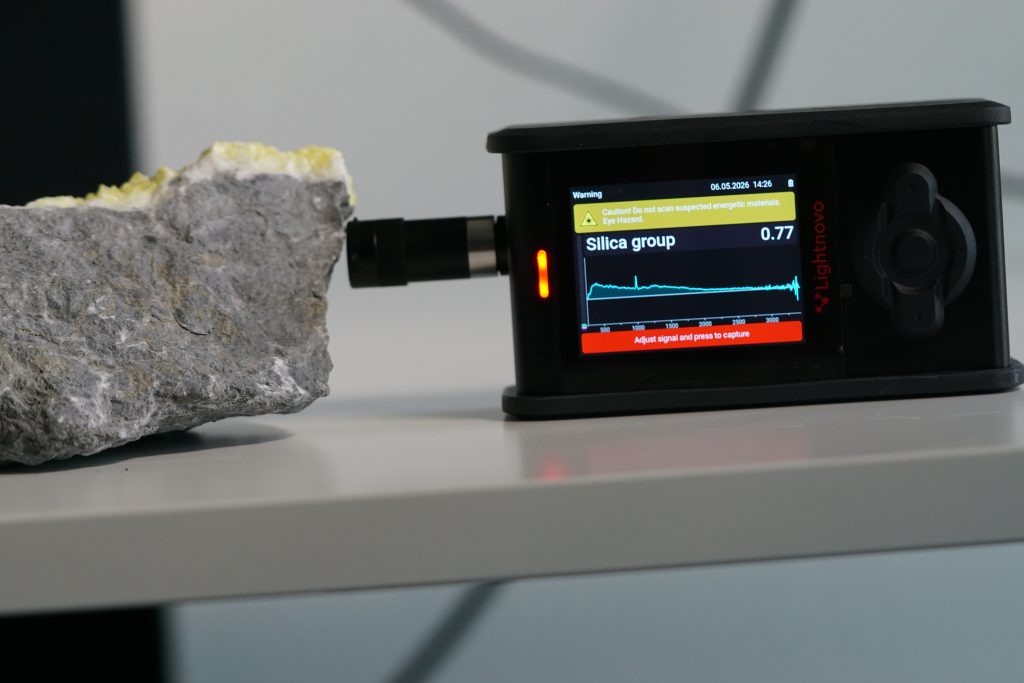
How Raman spectroscopy is transforming pharmaceutical development, quality control, counterfeit detection and process monitoring
Pharmaceutical manufacturers need analytical techniques that can provide reliable chemical information without slowing production. From active pharmaceutical ingredient (API) identification and raw-material verification to tablet analysis, polymorph characterisation and real-time process monitoring, modern pharmaceutical development increasingly depends on fast, non-destructive analytical methods.
Raman spectroscopy is particularly well suited to these requirements.
Unlike many conventional analytical techniques, Raman spectroscopy can provide a molecular fingerprint with little or no sample preparation. It can analyse solids, powders, liquids and finished dosage forms, while Raman microscopy adds spatial information that can reveal how APIs and excipients are distributed within a pharmaceutical formulation. Raman spectroscopy is also increasingly used as a Process Analytical Technology (PAT) tool for real-time monitoring and control.
For pharmaceutical scientists, formulation researchers, quality-control laboratories and manufacturers, Raman spectroscopy therefore offers much more than simple material identification.
It can provide a route towards faster pharmaceutical analysis, non-destructive quality control and data-driven process monitoring.
Photonic Solutions supplies a range of Lightnovo Raman spectrometers and Raman microscopes, including compact systems suitable for pharmaceutical research, materials identification and quantitative measurements.
What is Raman spectroscopy?
Raman spectroscopy is a vibrational spectroscopy technique that measures the inelastic scattering of laser light.
When laser light interacts with a material, most photons are scattered elastically. However, a small proportion interact with molecular vibrations and are scattered at different energies.
These energy shifts create a Raman spectrum.
The resulting spectrum contains information about the molecular structure and chemical composition of the sample. Because different molecules produce characteristic Raman bands, the spectrum can act as a molecular fingerprint.
The United States Pharmacopeia describes Raman as complementary to infrared and near-infrared spectroscopy because the techniques respond differently to molecular vibrations. Raman is particularly sensitive to changes in molecular polarizability and can provide strong signals from many non-polar bonds.
This complementary nature is important in pharmaceutical analysis.
Rather than asking whether Raman is “better” than FTIR or NIR spectroscopy, the more useful question is:
Which technique provides the most useful chemical information for the specific pharmaceutical application?
Why use Raman spectroscopy for pharmaceutical analysis?
Pharmaceutical analysis presents several challenges.
A formulation may contain:
- An active pharmaceutical ingredient
- Multiple excipients
- Coatings
- Binders
- Fillers
- Lubricants
- Stabilising agents
- Crystalline and amorphous components
The final product can therefore be chemically and physically complex.
Raman spectroscopy offers several advantages:
Non-destructive analysis
Samples can often be analysed without destroying the pharmaceutical product.
Minimal sample preparation
Many pharmaceutical solids, powders and tablets can be measured directly.
Chemical specificity
Raman spectra provide molecular information that can distinguish materials with similar physical appearances.
Rapid measurements
Spectra can often be acquired rapidly, making Raman attractive for screening and process monitoring.
Spatially resolved analysis
Raman microscopy can map chemical composition across a pharmaceutical tablet or other formulation.
Compatibility with chemometrics
Multivariate analysis can extract quantitative and classification information from complex Raman datasets.
Potential for in-line analysis
Raman spectroscopy can be integrated with process equipment for real-time monitoring.
These capabilities have helped establish Raman as an important analytical technology within pharmaceutical development and manufacturing.
Raman spectroscopy in pharmaceutical development
Pharmaceutical development involves understanding much more than the chemical identity of an API.
Researchers need to understand:
- Chemical composition
- Solid-state form
- Polymorphism
- Crystallinity
- API distribution
- Excipient interactions
- Stability
- Formulation uniformity
- Manufacturing processes
Raman spectroscopy can contribute at several stages.
A typical workflow might look like:
Raw materials
↓
API characterisation
↓
Formulation development
↓
Tablet and dosage-form analysis
↓
Process monitoring
↓
Finished-product quality control
↓
Stability and authenticity testing
This broad applicability is one reason Raman spectroscopy has become increasingly important within pharmaceutical research.
A review in Advanced Drug Delivery Reviews describes applications spanning preformulation, solid-state analysis, drug delivery systems, process analytical technologies, quality control and dissolution testing.
Raman spectroscopy for API identification
One of the most straightforward pharmaceutical applications is active pharmaceutical ingredient identification.
Different APIs produce characteristic Raman spectra because their molecular structures generate different vibrational signatures.
This makes Raman spectroscopy useful for:
- Raw-material identification
- Incoming goods inspection
- API verification
- Pharmaceutical ingredient screening
- Material identification
- Investigation of unknown powders
For example, a Raman spectrum from an incoming batch of API can be compared with a validated reference spectrum.
The workflow becomes:
Measure sample → acquire Raman spectrum → compare with reference → identify material
The approach can be particularly attractive when rapid identification is required without consuming the sample.
The USP recognises Raman spectroscopy as an analytical identification technique and provides dedicated guidance covering instrument performance, reference materials, sample measurement and spectral comparison.
Raman spectroscopy for pharmaceutical raw-material verification
Raw-material identity is fundamental to pharmaceutical manufacturing.
If the wrong material enters a manufacturing process, downstream testing may not identify the problem until significant time and resources have been invested.
Raman spectroscopy can provide rapid incoming raw-material verification.
Potential applications include identification of:
- APIs
- Excipients
- Powders
- Crystalline materials
- Solvents
- Polymer components
- Packaging materials
The ability to analyse materials with minimal preparation can make Raman particularly attractive for warehouse and receiving environments.
Compact Raman systems also create opportunities to move testing closer to the point of receipt rather than relying exclusively on central laboratory analysis.
Photonic Solutions’ Lightnovo miniRaman is designed as a compact Raman platform for materials identification and quantitative measurements, with pharmaceutical applications listed by Photonic Solutions.
Raman spectroscopy for tablet analysis
Finished pharmaceutical tablets are complex materials.
A tablet may contain several excipients alongside the API, and the distribution of those components can influence product performance.
Raman spectroscopy can analyse the chemical composition of an intact tablet without necessarily requiring it to be dissolved or otherwise destroyed.
Researchers have demonstrated the use of Raman spectroscopy and chemometrics to distinguish pharmaceutical tablets according to:
- API content
- Excipients
- Coatings
- Formulation differences
- Chemical changes
A systematic study of model tablets demonstrated that dispersive Raman spectroscopy combined with principal component analysis could distinguish samples with different coatings, API amounts and excipient compositions.
This illustrates an important advantage of Raman analysis:
The entire spectral fingerprint can be analysed rather than relying on a single chemical marker.
Raman spectroscopy for content uniformity
Content uniformity is a critical consideration in pharmaceutical manufacturing.
A finished dosage form must contain the intended amount of API and distribute that API consistently between individual units.
Traditional testing can provide highly accurate quantitative measurements, but often requires destructive sampling.
Raman spectroscopy provides an alternative approach for investigating API distribution and content uniformity.
When combined with Raman microscopy, researchers can produce spatial maps showing where different chemical components occur within a tablet.
This can reveal:
- API distribution
- Excipient distribution
- Segregation
- Concentration gradients
- Coating structures
- Localised formulation differences
Reviews of Raman and other vibrational spectroscopic imaging techniques have identified content uniformity and spatial API distribution as important applications in pharmaceutical analysis.
Raman microscopy for pharmaceutical tablets
Raman microscopy takes pharmaceutical analysis a step further.
Instead of collecting a single spectrum from an entire sample, a Raman microscope can collect spectra at multiple positions.
The result is a chemical map.
For example:
Raman spectrum at point 1
→ API-rich region
Raman spectrum at point 2
→ Excipient-rich region
Raman spectrum at point 3
→ Coating
Repeating this across a sample generates a two-dimensional chemical image.
Three-dimensional Raman mapping can also be used where appropriate.
Photonic Solutions has already highlighted research demonstrating confocal Raman microscopy for quantitative 2D and 3D orientation mapping, including pharmaceutical tablet formulations.
Polymorphism and solid-state pharmaceutical analysis
One of the most important applications of Raman spectroscopy in pharmaceutical development is polymorph identification.
A pharmaceutical compound can sometimes exist in more than one crystalline form.
These polymorphs may have different:
- Crystal structures
- Solubilities
- Stability
- Melting points
- Dissolution behaviour
- Bioavailability
A change in crystal form can therefore affect pharmaceutical performance.
Because Raman spectroscopy is sensitive to molecular vibrations and the molecular environment, changes in crystal structure can produce measurable spectral differences.
Raman spectroscopy can therefore help researchers:
- Identify polymorphs
- Monitor polymorphic transitions
- Characterise solid-state forms
- Study crystallisation
- Investigate formulation stability
A review of chemometrics and vibrational spectroscopy in pharmaceutical products specifically identifies polymorph analysis and monitoring polymorphic transitions as important applications.
Monitoring pharmaceutical crystallisation
Raman spectroscopy can also monitor crystallisation processes.
This is particularly valuable because crystallisation is often a dynamic process.
Rather than analysing a sample only after crystallisation has finished, Raman spectroscopy can monitor changes in the chemical and structural fingerprint during the process.
This creates the possibility of tracking:
Starting material
↓
Supersaturation
↓
Nucleation
↓
Crystal growth
↓
Final crystalline form
Such measurements can provide information for process optimisation and control.
Raman spectroscopy has been reported for in situ crystallisation monitoring and pharmaceutical process analysis.
Raman spectroscopy as Process Analytical Technology (PAT)
One of the most significant pharmaceutical applications of Raman spectroscopy is Process Analytical Technology.
The FDA’s PAT framework encouraged pharmaceutical manufacturers to move towards better process understanding, measurement and control rather than relying solely on end-product testing.
Raman spectroscopy is particularly suited to this philosophy because it can provide rapid, non-destructive chemical measurements during manufacturing.
A major review of Raman spectroscopy as a pharmaceutical PAT describes applications including:
- Real-time release testing
- Continuous manufacturing
- Statistical process control
- API analysis
- In situ crystallisation monitoring
- Pharmaceutical unit operations
- Process-induced transformations
Instead of:
Manufacture → test → accept/reject
PAT encourages a more responsive model:
Measure → understand → control → manufacture consistently
Raman spectroscopy for real-time pharmaceutical manufacturing
Raman analysers can potentially be integrated into manufacturing equipment to provide continuous measurements.
Depending on the process, this can include monitoring:
- API concentration
- Excipient concentration
- Blend uniformity
- Reaction progress
- Crystallisation
- Dissolution
- Fermentation
- Bioprocess parameters
Research has demonstrated Raman applications throughout pharmaceutical manufacturing and bioprocessing, including in situ measurements and real-time process control.
This is particularly relevant to continuous pharmaceutical manufacturing, where conventional laboratory sampling can introduce delays between process changes and analytical results.
Raman spectroscopy for blend uniformity
Before a tablet is compressed, pharmaceutical ingredients often need to be blended to achieve a consistent composition.
Poor mixing can create regions with different API concentrations.
Raman spectroscopy can monitor the composition of the blend without requiring traditional destructive sampling.
A process Raman system can collect measurements over time and use chemometric models to determine whether the blend has reached an acceptable state.
The objective is simple:
Consistent Raman signal → consistent composition → controlled manufacturing process
However, it is important to recognise that Raman performance depends on the formulation, sampling geometry, particle characteristics and calibration model.
Published research has demonstrated the usefulness of Raman for pharmaceutical process monitoring, while also showing that not every physical manufacturing variation is necessarily distinguishable from Raman spectra alone.
Raman spectroscopy for pharmaceutical quality control
Quality control laboratories can use Raman spectroscopy as part of a broader analytical strategy.
Potential applications include:
- Raw-material identification
- API verification
- Finished-product identification
- Tablet characterisation
- Excipient analysis
- Polymorph identification
- Contamination screening
- Stability studies
- Counterfeit detection
Raman can therefore complement techniques such as:
- HPLC
- GC-MS
- FTIR
- NIR spectroscopy
- X-ray diffraction
- Mass spectrometry
The objective is not necessarily to replace established analytical techniques.
Instead, Raman can provide rapid, complementary chemical information.
Raman spectroscopy versus NIR and FTIR in pharmaceutical analysis
Raman, NIR and FTIR all provide vibrational spectroscopic information, but they interact with molecular vibrations differently.
| Technique | Typical strength | Pharmaceutical applications |
|---|---|---|
| Raman | Molecular fingerprint; strong response from many non-polar bonds | API identification, polymorphs, tablets, PAT, counterfeit detection |
| NIR | Rapid bulk analysis and process monitoring | Blend uniformity, moisture, content analysis, PAT |
| FTIR | Strong molecular absorption information | Identification, functional groups, raw materials, formulation analysis |
Raman and IR/NIR should therefore be viewed as complementary techniques, rather than direct substitutes. USP specifically describes Raman as complementary to IR and NIR spectroscopy.
Raman spectroscopy and water-rich pharmaceutical processes
One particularly useful characteristic of Raman spectroscopy is its relationship with water.
Water produces a strong infrared absorption spectrum but a comparatively weak Raman signal. This can make Raman particularly useful for analysing aqueous systems where IR measurements can be strongly affected by water absorption.
This is one reason Raman spectroscopy has become valuable in biopharmaceutical process monitoring.
Applications can include monitoring components within cell culture and fermentation processes.
Research reviews describe Raman spectroscopy being used from single-cell analysis through to cGMP process control in biopharmaceutical manufacturing.
Raman spectroscopy in biopharmaceutical manufacturing
The pharmaceutical industry increasingly includes complex biological products such as:
- Monoclonal antibodies
- Recombinant proteins
- Vaccines
- Cell therapies
- Gene therapies
- Other biologics
These processes can be highly sensitive to changes in culture conditions.
Raman spectroscopy can provide non-invasive measurements of multiple chemical parameters during bioprocessing.
Potential measurements include:
- Glucose
- Lactate
- Glutamine
- Cell density
- Product concentration
- Other process variables
A review in Pharmaceutics describes Raman spectroscopy as an increasingly important PAT tool in biopharmaceutical manufacturing, supporting process control from development through to commercial production.
Raman spectroscopy for counterfeit pharmaceutical detection
Counterfeit and falsified medicines remain a serious pharmaceutical quality and public-health challenge.
Raman spectroscopy is particularly interesting because counterfeit products can sometimes be screened without destroying the sample.
A Raman spectrum can reveal differences in:
- API composition
- Excipients
- Coatings
- Tablet composition
- Packaging
- Degradation products
A systematic study of model tablets demonstrated that Raman spectroscopy combined with principal component analysis could discriminate between different coatings, API amounts and excipients. The same work also showed that Raman measurements could identify small chemical changes caused by inappropriate storage before obvious visual changes appeared.
This creates opportunities for:
- Pharmaceutical manufacturers
- Customs authorities
- Regulatory agencies
- Forensic laboratories
- Distributors
- Healthcare organisations
Raman spectroscopy for pharmaceutical stability testing
Pharmaceutical products can change during storage.
Temperature, humidity, light and other environmental conditions can influence chemical and physical stability.
Raman spectroscopy can detect changes in the molecular fingerprint that may not yet be obvious visually.
In the model-tablet study described above, Raman spectroscopy detected small chemical changes associated with different storage conditions before visual changes became apparent.
This makes Raman spectroscopy interesting for stability studies and accelerated ageing research.
It can provide a non-destructive way to monitor samples repeatedly over time.
Raman spectroscopy for drug delivery systems
Pharmaceutical development increasingly focuses on controlling how an active ingredient is delivered.
Raman spectroscopy and Raman microscopy can help researchers understand:
- Drug distribution
- Drug-polymer interactions
- Drug release
- Coatings
- Microstructure
- Crystallinity
- Chemical changes during formulation
The pharmaceutical Raman literature includes applications in drug delivery systems and microstructural analysis.
For advanced formulations, Raman microscopy can provide an additional layer of information by linking chemical composition with spatial structure.
Chemometrics: turning Raman spectra into pharmaceutical information
A Raman spectrum can contain thousands of individual data points.
For complex pharmaceutical formulations, interpreting every peak manually is rarely practical.
This is where chemometrics becomes important.
Chemometric methods can be used for:
- Classification
- Quantification
- Authentication
- Process monitoring
- Multivariate calibration
- Outlier detection
Common approaches include:
Principal Component Analysis (PCA)
Useful for exploring spectral datasets and identifying clustering or differences between samples.
Partial Least Squares (PLS)
Useful for developing quantitative models from Raman spectra.
PLS-DA
Useful for classification problems.
Machine learning
More advanced classification approaches can be used when datasets are sufficiently large and representative.
The combination of Raman spectroscopy and chemometrics has been extensively investigated for pharmaceutical analysis, including content uniformity, polymorphism and counterfeit detection.
Why laser wavelength matters in pharmaceutical Raman spectroscopy
Selecting the correct excitation wavelength is an important part of Raman system design.
Common Raman excitation wavelengths include:
- 405 nm
- 532 nm
- 633 nm
- 660 nm
- 785 nm
- 830 nm
- 1064 nm
Shorter wavelengths can provide stronger Raman scattering, but some pharmaceutical samples can exhibit fluorescence that interferes with the Raman signal.
Longer wavelengths such as 785 nm can reduce fluorescence in some materials.
The optimum wavelength depends on:
- API chemistry
- Excipients
- Fluorescence
- Sample colour
- Required spectral range
- Raman sensitivity
- Measurement geometry
There is therefore no universally “best” Raman wavelength for pharmaceutical analysis.
Choosing a Raman spectrometer for pharmaceutical analysis
The correct instrument depends on the application.
For rapid material identification
A compact Raman spectrometer can provide a practical solution for raw-material verification and field or warehouse screening.
The Lightnovo miniRaman Spectrometer measures just 112 × 39 × 34 mm and weighs approximately 400 g. It incorporates an integrated reference channel for continuous Raman shift and intensity calibration.
For portable quantitative measurements
The Lightnovo miniRaman Pro combines a compact form factor with improved optical performance, temperature stabilisation and an integrated reference channel designed to provide stable and reproducible Raman spectra.
Photonic Solutions lists pharmaceuticals among its application categories.
For high-resolution pharmaceutical research
The Lightnovo RG Raman Spectrometer provides a research-grade platform with four excitation wavelength options: 405, 532, 633 and 785 nm.
Depending on configuration, it offers spectral coverage from 50–2500 cm⁻¹ or up to 3700 cm⁻¹, with spectral resolution down to 2–4 cm⁻¹. Photonic Solutions specifically lists pharmaceuticals among its applications.
This makes the RG platform particularly interesting for researchers investigating API chemistry, polymorphs, formulations and advanced Raman applications.
Raman microscopy for pharmaceutical research
When chemical distribution matters, Raman microscopy can offer considerably more information than a single-point Raman measurement.
The Lightnovo miniRaman Microscope provides confocal Raman microscopy in a footprint of approximately 12 × 13 cm, with 660 nm and 785 nm excitation options and reflection, off-axis and transmission white-light microscopy. Photonic Solutions lists pharmaceuticals as an application.
For more demanding research applications, the Lightnovo RG Raman Microscope provides high spectral and spatial resolution, long mapping ranges and a broad Raman spectral range. It can operate in upright or inverted microscopy configurations.
These systems are particularly relevant to:
- Tablet mapping
- API distribution
- Excipient mapping
- Polymorph studies
- Pharmaceutical microstructure
- Coatings
- Crystallisation research
Raman spectroscopy and pharmaceutical regulatory requirements
For pharmaceutical applications, instrument performance is only part of the equation.
A Raman method intended for regulated use needs appropriate:
- Calibration
- Reference materials
- Data processing
- Method development
- Validation
- System suitability
- Documentation
- Change control
The USP provides dedicated Raman spectroscopy chapters, including <858> Raman Spectroscopy and <1858> Raman Spectroscopy—Theory and Practice. These cover aspects including Raman measurement, instrumentation, calibration, sampling and validation considerations.
The FDA’s Q14 Analytical Procedure Development guidance, issued in 2024, also addresses analytical procedure development and links to the principles of analytical procedure validation described in ICH Q2(R2), including applications involving spectroscopic data.
This means a Raman method for a regulated pharmaceutical application should be developed and validated according to the relevant regulatory framework rather than assuming that an instrument’s measurement alone constitutes a validated analytical procedure.
Raman spectroscopy is not a replacement for every pharmaceutical technique
Raman spectroscopy is powerful, but it has limitations.
Potential challenges include:
Fluorescence
Some pharmaceutical materials can generate fluorescence that overwhelms the Raman signal.
Sampling
Particle size, surface roughness, concentration and sample geometry can influence measurements.
Laser interaction
Laser power must be selected carefully to avoid heating or damaging sensitive samples.
Complex formulations
Overlapping Raman bands can make interpretation difficult.
Chemometric model dependence
Quantitative or classification models require representative calibration and validation datasets.
Regulatory validation
A research measurement is not automatically a validated GMP analytical method.
These limitations do not diminish Raman’s value. They highlight the importance of matching the instrument, sampling optics and analytical method to the pharmaceutical application.
Raman spectroscopy as part of a pharmaceutical analytical toolkit
The strongest pharmaceutical laboratories are unlikely to rely on one analytical technique for every question.
Instead, Raman can sit alongside:
Raman spectroscopy
→ Molecular fingerprint
Raman microscopy
→ Spatial chemical information
NIR spectroscopy
→ Rapid bulk/process analysis
FTIR
→ Functional-group and molecular identification
HPLC
→ High-specificity quantitative analysis
Mass spectrometry
→ Detailed molecular identification
X-ray diffraction
→ Crystal structure and polymorph analysis
Used intelligently, these techniques provide complementary information.
The future of Raman spectroscopy in pharmaceutical analysis
The pharmaceutical industry is moving towards more connected, data-rich and responsive manufacturing processes.
Raman spectroscopy fits naturally into this evolution.
The combination of:
- Compact Raman instruments
- Fibre-optic sampling
- Raman microscopy
- Chemometrics
- Machine learning
- Automated sampling
- Process integration
- Real-time analysis
creates opportunities for increasingly sophisticated pharmaceutical analytical workflows.
Research has already demonstrated Raman integration into real-time release testing, continuous manufacturing and statistical process control.
The next step is not simply collecting more Raman spectra.
It is turning those spectra into actionable manufacturing information.
Raman spectroscopy for pharmaceutical analysis: key applications
| Application | What Raman can provide |
|---|---|
| API identification | Molecular fingerprint and material verification |
| Raw-material testing | Rapid, non-destructive identification |
| Tablet analysis | Chemical composition and formulation differences |
| Content uniformity | API distribution and quantitative information |
| Polymorph analysis | Identification of different solid-state forms |
| Crystallisation | In situ monitoring of structural changes |
| Counterfeit detection | Spectral comparison and chemometric classification |
| Stability testing | Detection of chemical changes during storage |
| PAT | Real-time process information |
| Blend monitoring | Assessment of composition and uniformity |
| Bioprocessing | In situ monitoring of biological manufacturing |
| Raman microscopy | Spatially resolved chemical mapping |
Frequently asked questions about Raman spectroscopy for pharmaceutical analysis
What is Raman spectroscopy used for in pharmaceuticals?
Raman spectroscopy is used for API identification, raw-material verification, tablet analysis, polymorph characterisation, content uniformity, counterfeit detection, stability studies and process monitoring. It is also increasingly used as a Process Analytical Technology for pharmaceutical manufacturing.
Can Raman spectroscopy identify an API?
Yes. APIs can produce characteristic Raman spectra that can be compared with reference spectra for identification, subject to appropriate method development and validation.
Can Raman spectroscopy analyse tablets?
Yes. Raman spectroscopy can analyse intact pharmaceutical tablets and, when combined with chemometrics or Raman microscopy, can provide information about composition, API distribution and formulation differences.
Can Raman spectroscopy measure API concentration?
Yes. Raman spectra can be used with multivariate calibration models for quantitative analysis. The method needs appropriate calibration, validation and control of measurement variables.
Can Raman spectroscopy detect counterfeit medicines?
Raman spectroscopy can provide a rapid, non-destructive screening method for identifying differences between genuine and counterfeit pharmaceutical products. Research has demonstrated discrimination based on API, excipients and coatings.
Can Raman spectroscopy identify polymorphs?
Yes. Raman spectroscopy is sensitive to molecular and solid-state changes and has been investigated extensively for pharmaceutical polymorph identification and monitoring.
Is Raman spectroscopy suitable for PAT?
Yes. Raman is an established PAT technology with published applications in real-time process monitoring, continuous manufacturing, statistical process control and real-time release testing.
Is Raman spectroscopy suitable for GMP pharmaceutical manufacturing?
Potentially, yes. However, the suitability of a Raman system depends on the application, method development, validation, data integrity and applicable regulatory requirements. The instrument itself does not make an analytical method GMP compliant. USP and ICH/FDA guidance should be considered when developing regulated analytical procedures.
Explore Raman spectroscopy for pharmaceutical applications
Photonic Solutions supplies a specialist portfolio of Lightnovo Raman spectrometers and Raman microscopes for pharmaceutical research, materials analysis and industrial applications.
The miniRaman Spectrometer provides a highly compact platform for material identification and quantitative measurements.
The miniRaman Pro Spectrometer brings lab-level Raman performance into a compact handheld format, with pharmaceutical applications listed by Photonic Solutions.
For demanding research applications, the RG Raman Spectrometer offers high spectral resolution, multiple excitation wavelengths and broad spectral coverage.
For spatially resolved pharmaceutical analysis, Lightnovo Raman Microscopes provide confocal Raman microscopy for chemical mapping and high-resolution materials characterisation.
Explore Photonic Solutions’ Raman Spectrometers
Explore Photonic Solutions’ Raman Microscopy range
Conclusion
Raman spectroscopy has evolved from a laboratory characterisation technique into a powerful tool for pharmaceutical analysis, quality control and process monitoring.
Its ability to provide molecular information rapidly and non-destructively makes it valuable across the pharmaceutical product lifecycle.
From API identification and raw-material verification through to tablet mapping, polymorph analysis, counterfeit detection and real-time process monitoring, Raman spectroscopy can provide information that helps pharmaceutical scientists understand not only what a product contains, but also how its components are distributed and how the manufacturing process is behaving.
For pharmaceutical manufacturers adopting Quality by Design, Process Analytical Technology and increasingly continuous manufacturing approaches, that capability is particularly valuable.
The most effective Raman implementations, however, are not simply about choosing a high-performance spectrometer. They combine the right laser wavelength, sampling configuration, spectral range, chemometric model and validation strategy with a clear understanding of the pharmaceutical process.
That is where application expertise becomes as important as the instrument itself.
Photonic Solutions works with researchers, pharmaceutical companies and industrial users to identify the Raman spectroscopy configuration best suited to their analytical requirements.
Research and further reading
The following sources provide a strong academic foundation for the applications discussed above:
- Li et al. — “Raman spectroscopy as a process analytical technology for pharmaceutical manufacturing and bioprocessing.” Analytical and Bioanalytical Chemistry. A comprehensive review of Raman as a PAT tool, including real-time release, continuous manufacturing and bioprocessing.
- Neuberger & Neusüß — “Determination of counterfeit medicines by Raman spectroscopy: Systematic study based on a large set of model tablets.” Journal of Pharmaceutical and Biomedical Analysis, 2015. DOI: 10.1016/j.jpba.2015.04.001.
- De Beer et al. — “Near infrared and Raman spectroscopy for the in-process monitoring of pharmaceutical production processes.” International Journal of Pharmaceutics, 2011. DOI: 10.1016/j.ijpharm.2010.12.012.Araujo et al. — “Chemometrics coupled to vibrational spectroscopy and spectroscopic imaging for the analysis of solid-phase pharmaceutical products.” Trends in Analytical Chemistry, 2018. DOI: 10.1016/j.trac.2018.08.013.
- “Raman spectroscopy in pharmaceutical product design.“ Advanced Drug Delivery Reviews, 2015. DOI: 10.1016/j.addr.2015.04.003.
- “Raman Spectroscopy for Quantitative Analysis in the Pharmaceutical Industry.“ Review covering quantitative pharmaceutical analysis and PAT applications.
- USP General Chapter <858>, Raman Spectroscopy. Provides pharmaceutical guidance concerning Raman theory, measurement and identification.
- USP General Chapter <1858>, Raman Spectroscopy—Theory and Practice. Covers Raman theory, applications, quantitative measurements, sampling, calibration and validation considerations.
- FDA — Q14 Analytical Procedure Development. Final guidance issued in March 2024 covering analytical procedure development and the relationship with analytical procedure validation under ICH Q2(R2).